
Last updated November 15, 2026
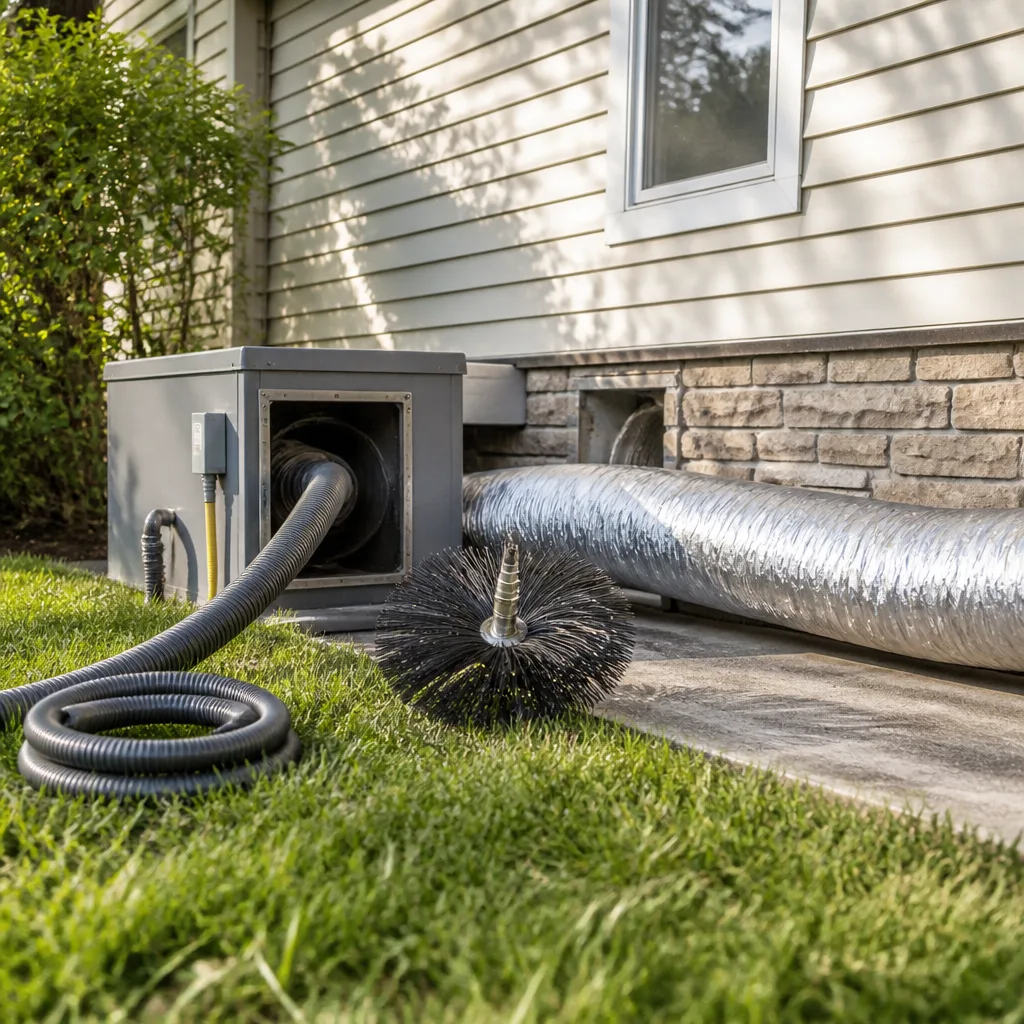 Whole-home duct cleaning
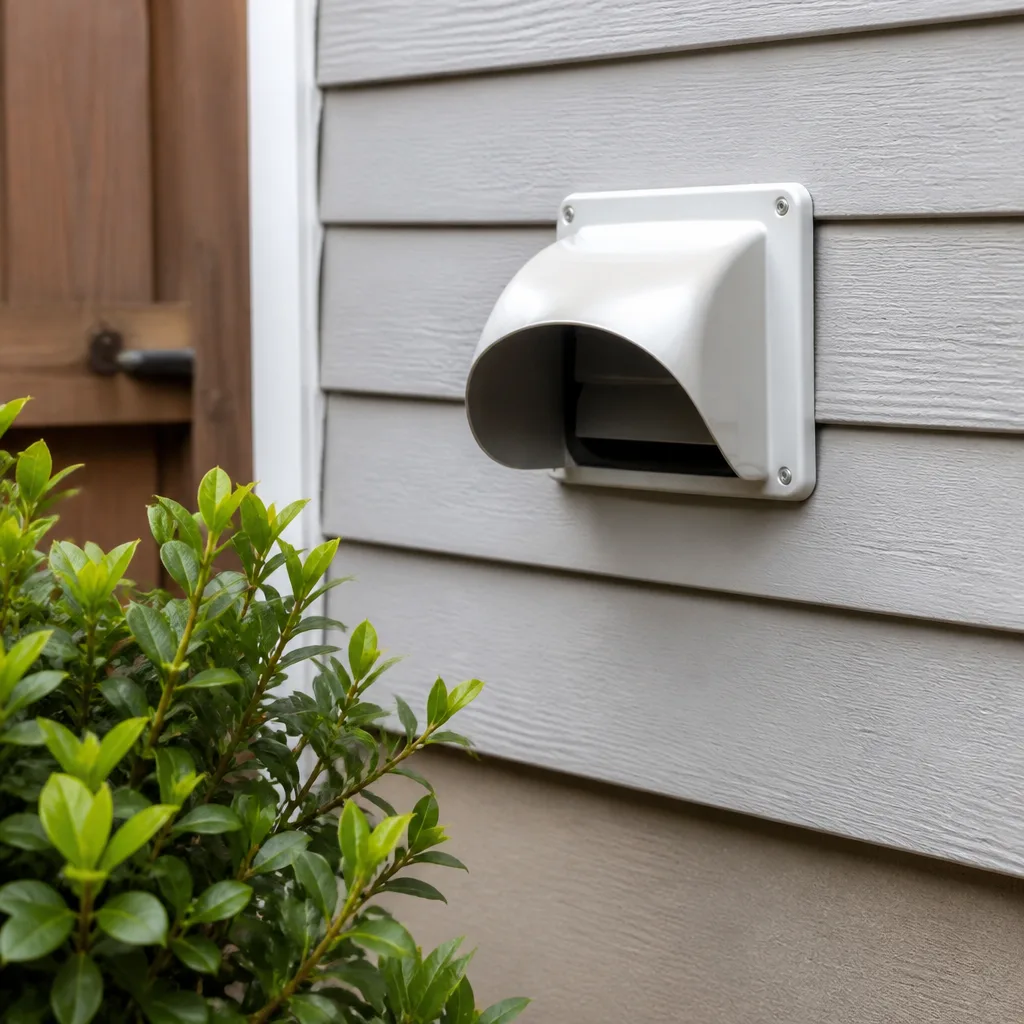 Dryer vent cleaning
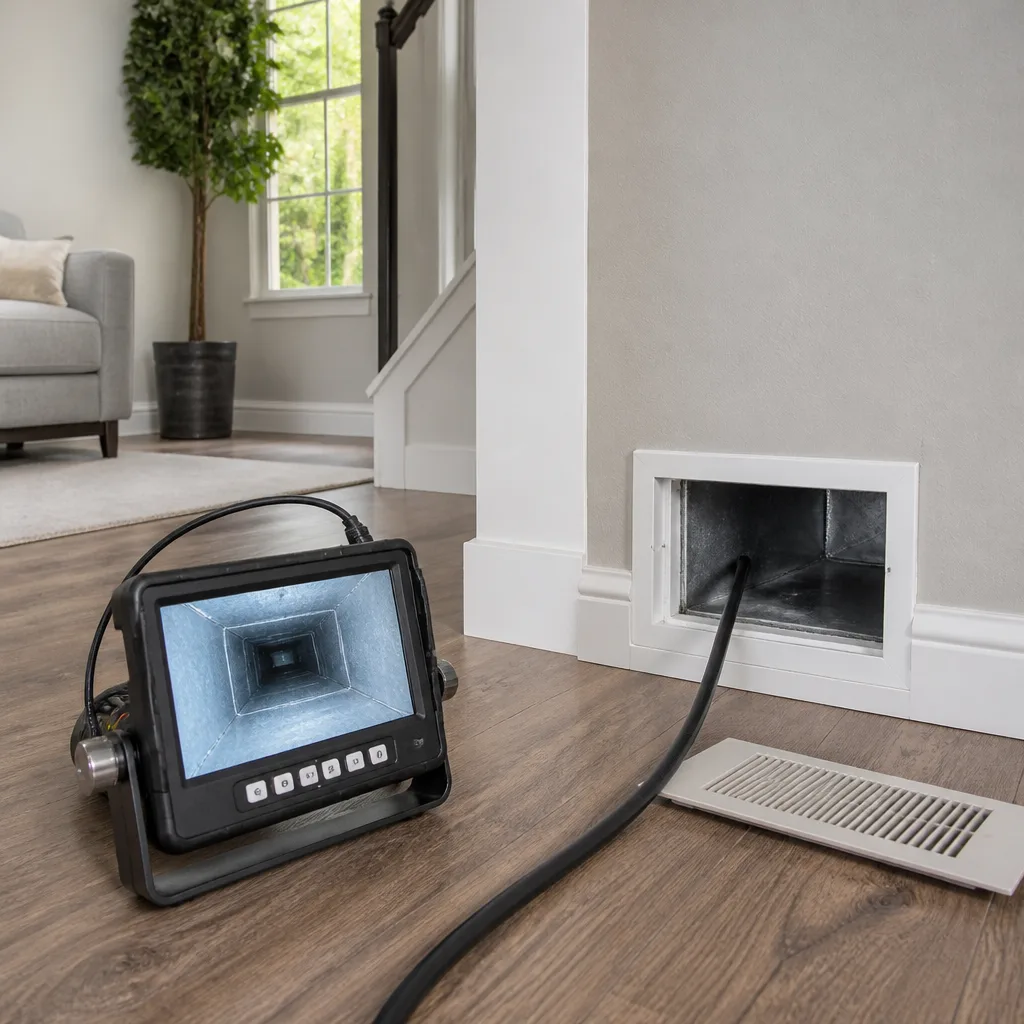 Camera inspection
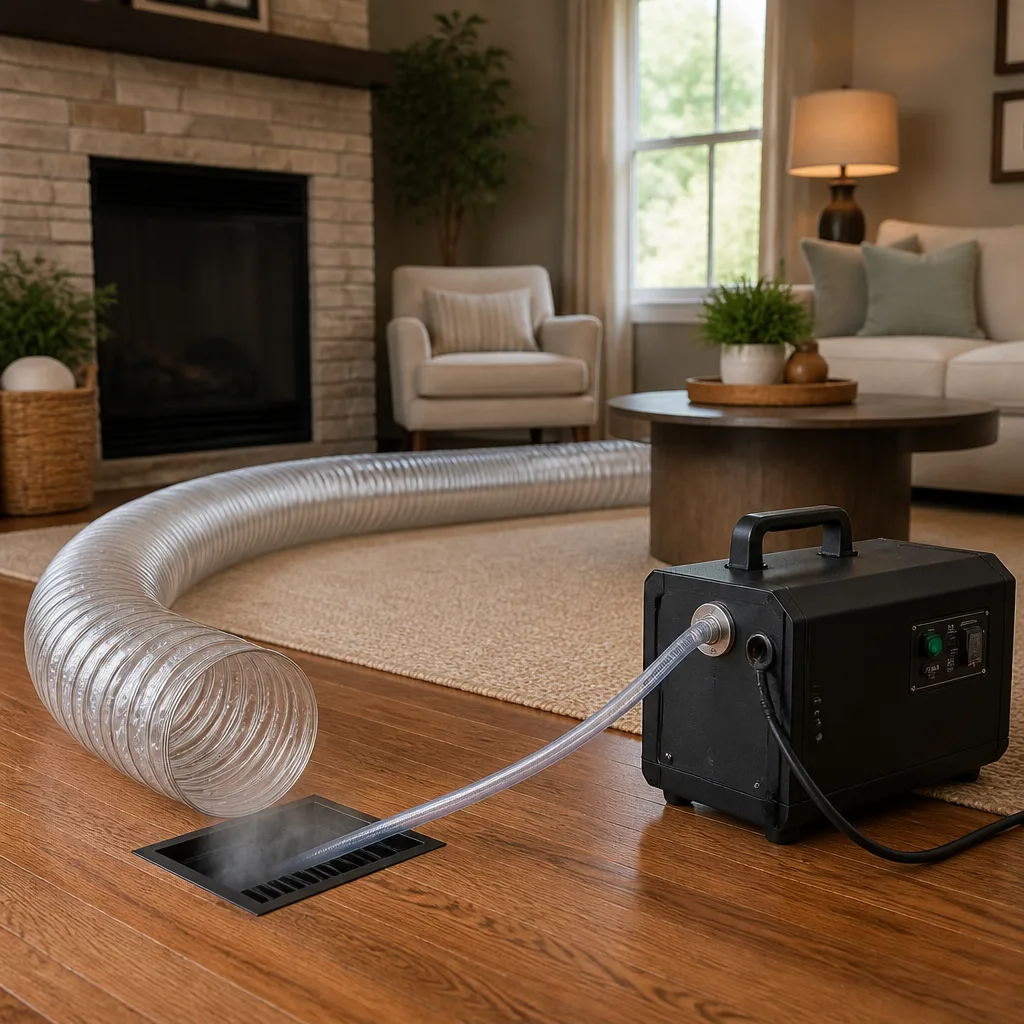 Sanitizing & deodorizing
Whole-system duct and dryer vent check with before-and-after photos - you see exactly what came out of your vents
That "$99 whole-house special" is a bait ad - the real number appears once they are in your hallway, or the "clean" is a shop-vac at the register. We photograph the inside of your ducts before and after instead.
DIY vs Professional Air Duct Cleaning: The Peoria Homeowner’s Decision Guide
The shop vac in your garage pulls roughly 100 CFM. Professional truck-mount duct cleaning equipment pulls 5,000 to 15,000 CFM. That gap isn’t a marketing talking point – it’s the physical threshold that decides whether debris leaves your duct system or just gets stirred around inside it. Most DIY-versus-pro debates skip this fact entirely and argue about cost, which sends homeowners in Peoria down the wrong path. What you can reasonably do yourself and what genuinely requires source-removal equipment are two different jobs. This guide separates them, explains where each one earns its place, and tells you which one your house actually needs.
Quick Answer
DIY duct work is best understood as maintenance, not cleaning: you can wash return grilles, swap and optimize filters, vacuum registers, and inspect visible ductwork yourself. True cleaning – removing settled debris from main trunk lines and deep flex runs at the source – requires professional negative-pressure equipment because consumer tools cannot generate enough airflow to lift and capture contamination. In Peoria, a well-maintained home may only need professional cleaning every few years, while homes after renovation, pest issues, or with heavy visible buildup need it now.
Styles & brands we work with
- Whole-home duct cleaning
- Dryer vent cleaning
- Camera inspection
- Sanitizing & deodorizing
Table of Contents
- Why the Equipment Gap Decides Everything
- What You Can Legitimately Do Yourself
- What Requires Professional Equipment
- The Honest Cost-Benefit Breakdown
- Why Attic Access Makes DIY Risky in Peoria
- Maintenance Between Professional Cleanings
- Common Mistakes to Avoid
- When to Call a Professional
Why the Equipment Gap Decides Everything
Air duct cleaning is a source-removal job, and source removal depends on one thing: negative pressure. The concept is straightforward once you see it. A technician connects a high-volume vacuum to the main trunk or a strategic cut point, seals the system, and then works each branch line with an agitating tool – a rotary brush or air whip – while the vacuum holds the whole system under suction. Debris loosened in a branch line gets pulled toward the collection unit instead of drifting into your living room or settling back down the duct.
The physics don’t scale down. To pull settled dust, drywall grit, pet hair, and construction debris out of a ten- or twenty-foot flex run, you need airflow strong enough to carry the weight of that material. A shop vac running through a flexible hose loses most of its suction by the time it reaches the end of a run. It also creates no system-wide negative pressure – it only pulls from the one spot where you happen to be holding the nozzle. Loosened material that isn’t captured gets redistributed to other parts of the ductwork or pushed into the supply registers.
That redistribution is the failure mode. A homeowner who vacuums a register and sees dust disappear may assume the duct is clean, when what actually happened is that some material moved further down the line and will blow back into the room on the next cycle. Professional setups solve for this with three things consumer gear can’t match:
- Volume. Truck-mount and high-capacity portable units move thousands of CFM, creating a pressure differential across the entire system.
- Containment. HEPA filtration on the exhaust keeps fine particulate out of the home during the job.
- Agitation. Rotobrush and Nikro systems use rotary brushes and air whips sized for the duct, so loosened material travels with the airstream toward the vacuum rather than away from it.
This is the distinction we keep coming back to with homeowners in Peoria: most cleaners vacuum; source removal uses Rotobrush and Nikro equipment and holds the whole system under suction while it works. The two activities look similar from the driveway and are not remotely the same job.
What You Can Legitimately Do Yourself
There’s real value in homeowner maintenance – just call it what it is. None of the tasks below require special equipment, none of them create a safety risk for a careful homeowner, and all of them extend the interval between professional cleanings. What they don’t do is clean the inside of your trunk lines or deep flex runs.
- Clean the return grilles. The return air grille and the filter rack behind it collect a surprising amount of dust. Remove the grille, wash it in a sink or outside with a hose, dry it fully, and reinstall. This is the highest-return ten-minute task on the list.
- Vacuum visible registers with a brush attachment. Pull the supply registers and vacuum the visible boot around them. You can reach the first several inches of duct this way. Don’t force a hose deep into the run – it can dislodge material you have no way to capture.
- Optimize your filter strategy. A filter that’s too restrictive chokes airflow; one that’s too cheap passes fine dust into the system. Match the filter rating to what the system can handle, and change it on the schedule the manufacturer gives. Mark the date on the edge with a pencil so you’re not guessing.
- Check for obvious gaps and disconnects. Look at accessible ductwork in the garage or attic for sagging flex runs, torn outer jackets, or joints that have pulled apart. Note them – don’t try to fix them unless the joint is genuinely easy to reach and safe to access.
- Watch the airstream. A flashlight aimed at a supply register while the system runs shows you what’s actually coming through. If you’re seeing visible dust, that’s information.
- Keep the return path clear. Furniture pushed against return grilles starves the system and increases static pressure. A little clearance goes a long way.
Do those six things consistently and you’ll notice a difference in dust settling on surfaces. It’s duct maintenance, and it’s worth doing. It is not source removal.
What Requires Professional Equipment
Source removal – actually pulling settled debris out of the main trunk and long branch runs – is the part that doesn’t scale down to homeowner tools. This is where commercial-grade equipment and repair capability earn their place. Here’s what a proper cleaning covers that DIY cannot:
- Main trunk lines. These are the largest ducts in the system, and they’re the ones that collect the most settled debris over time. A shop vac can’t move enough air to lift material from the bottom of a trunk run.
- Deep flex duct runs. The ridges of flex duct trap material in a way smooth metal doesn’t. Loosening it requires rotary agitation; capturing it requires system-wide suction.
- Post-renovation and post-pest systems. Drywall dust, insulation fibers, rodent droppings, or heavy debris from a specific trigger event call for contamination-level cleaning. Abatement Technologies equipment exists for exactly this kind of job, and most residential cleaners decline it.
- Damaged ductwork found during the cleaning. This is the piece most people miss. When a technician opens a run and finds a torn flex jacket or a disconnected joint, that needs repair, not just cleaning. Not every duct cleaner offers repair as a standalone service – and being left to source a second contractor mid-job is frustrating.
The Peoria angle here matters. Homes in this market are heavily oriented around attic-mounted air handlers and flex duct, and that configuration collects debris in patterns you won’t see from a register. A proper air duct cleaning covers the trunk, the branches, the air handler cabinet, the blower, and the coil, and it’s done with the system under negative pressure throughout.
The Honest Cost-Benefit Breakdown
The right question isn’t “should I pay for professional cleaning or do it myself” – it’s “does this house benefit from professional cleaning right now, or is maintenance enough?” Here’s how to tell, and what each path involves.
When DIY maintenance is enough
- Your system was professionally cleaned within the last few years and you’ve kept up with filter changes.
- You don’t see visible dust, debris, or pest evidence at the registers.
- No recent renovation, no musty smell, no family member with worsening allergy symptoms.
- You’re in a home where you’ve been the only occupant and you keep the return grilles clean.
When professional cleaning has clear ROI
- You’ve just finished a renovation and the system was running during the work. Drywall dust in the ductwork needs source removal, not a shop vac.
- You’ve had a pest issue – rodents in the attic find their way into flex duct more often than most people realize.
- There’s a persistent musty smell that doesn’t improve with filter changes.
- You’ve just bought a home and don’t know the cleaning history. A baseline cleaning is often worth it before you move in.
- A family member with allergies or asthma isn’t improving, and you’ve addressed every other variable.
We’ve noticed a pattern in Peoria: the homes most likely to genuinely benefit are the ones where the system was closed up during a remodel, or where the home sat vacant for a while. A general cleanup of duct maintenance won’t touch what’s settled in that trunk line. Professional Peoria cleaning will.
Why Attic Access Makes DIY Risky in Peoria
The attic is where most of the ductwork lives in a Peoria home, and the attic is a hostile place for a homeowner with a shop vac. Summer attic temperatures here routinely push well past what’s safe for sustained work – the space between the roof deck and the ceiling sits in full sun for most of the day, and there’s little airflow. The practical window for working up there is narrow, and even that window is uncomfortable.
Beyond heat, attic duct runs are often tight and cramped. The paths between the air handler and the far end of the house may squeeze between joists and roof trusses, and one misstep can mean a foot through a ceiling. Ductwork itself is fragile – the outer jacket on flex duct is easy to tear when you’re working by feel in a confined space with a hose in your hand. A torn jacket is a hidden air leak that silently cuts system efficiency and pulls attic air into your living space.
The other risk is the one people underestimate: moving through an attic looking for ducts is not the same as walking through an attic looking for the light switch. Lines of sight are short, footing is uncertain, and heat stress builds quickly. Even professional technicians work in this environment with proper equipment and awareness of the limits; a homeowner with a shop vac and no plan is at genuine risk.
If your access to the system is through the garage, you’re in better shape. If it’s through a ceiling hatch in a hallway, treat any attic work as professional territory. The system doesn’t care about your intent – it only responds to whether it’s open and whether there’s enough airflow pulling through it.
Maintenance Between Professional Cleanings
What you do between cleanings determines how long the interval is, and for a well-kept Peoria home that interval is usually measured in years rather than months. Here’s the maintenance routine that actually moves the needle:
- Change the filter on schedule, not when you remember. Set a recurring reminder. Use the filter rating the system was designed for, not the highest MERV number available – an over-restrictive filter strains the blower and can reduce airflow enough to cause other problems.
- Wash return grilles seasonally. A quick wash every few months removes the dust layer before it can pass into the system.
- Vacuum registers with a brush head. Pull the register, vacuum the visible boot, put it back. Ten minutes per register, once or twice a year, keeps the entrance to the system clean.
- Seal accessible gaps. If you can safely reach a joint in the garage where two duct sections meet and the seam is open, foil tape is a legitimate fix. Anything you can’t reach safely is a professional conversation.
- Keep the return path clear inside the house. Don’t block return grilles with furniture, curtains, or rugs. Keep the filter rack accessible so changing the filter is easy.
- Address triggers immediately. After a renovation, a pest issue, or a water event, don’t wait. Debris that settles in a warm environment is much harder to remove later than it is right after the event.
Between professional cleanings, our dryer vent cleaning technicians often note the same principle at work: routine maintenance prevents the kind of buildup that requires a heavier intervention. Ducts run on the same logic. Cleared early, the job is smaller; ignored, it compounds.
If you notice your system is running longer than it used to, or you’re noticing dust settling faster than expected, that’s a cue to call for an inspection before a small issue grows. Duct Cleaning Peoria offers free estimates and can tell you plainly whether you need a cleaning or just a filter change.
Common Mistakes to Avoid
- Treating a shop vac as a duct cleaning system. It isn’t one. A shop vac reaches a few inches into a register and redistributes the rest. Two sentences on this topic sound like a scare tactic; treat them instead as a description of the tool’s actual capability.
- Pushing a hose aggressively into a flex run. The ribbed interior of flex duct tears easily, and a torn jacket is a hidden efficiency leak that’s much worse than the dust you were trying to reach. Stop at the visible boot.
- Skipping the air handler. Register cleaning that stops at the grille leaves the blower wheel and the coil untouched. Those are often where the worst buildup accumulates in a Peoria system, and they need professional access.
- Choosing a duct cleaner from a generalist contractor. A company that also does roofing, plumbing, and general HVAC is likely spreading its investment across tools and staff. Ask specifically what equipment will show up at the job. Rotobrush and Nikro come up in that conversation for a reason.
- Ignoring a damaged duct run discovered during cleaning. A contractor who can only clean and not repair will either leave the damage or charge for a second visit. Ask upfront whether repair is offered as part of the same service.
- Working in the attic during peak heat. A homeowner hauling a shop vac through an attic in mid-summer is one of the more common ways to turn a small duct issue into a hospital visit. Respect the heat.
- Paying for cleaning and skipping the photos. Before-and-after photographs of the actual ductwork being cleaned are the simplest way to confirm the work happened. If a company won’t provide them, that’s an answer.
When to Call a Professional
Some situations need a professional on-site, full stop. Post-renovation systems with drywall dust in the trunk lines. Pest activity inside ductwork. A musty smell that survives filter changes. Visible debris at the registers. Worsening allergy symptoms in the household with no other explanation. Any suspicion of damaged or disconnected ductwork. And any time the ductwork is reachable only through an attic hatch in summer heat.
Our technicians have up to experience working on duct systems, and our equipment is the same commercial-grade gear used by remediation contractors: Rotobrush and Nikro systems on every job, Abatement Technologies equipment on hand when the conditions call for it, and the capability to scope repairs found during cleaning. We clean it, we fix it, we improve it – and we stock and service Honeywell and Aprilaire indoor air quality products when a cleaning alone isn’t enough for the air in your home.
Duct Cleaning Peoria offers free estimates in Peoria – call (844) 834-5310 for a straight assessment of what your system actually needs.
See the difference
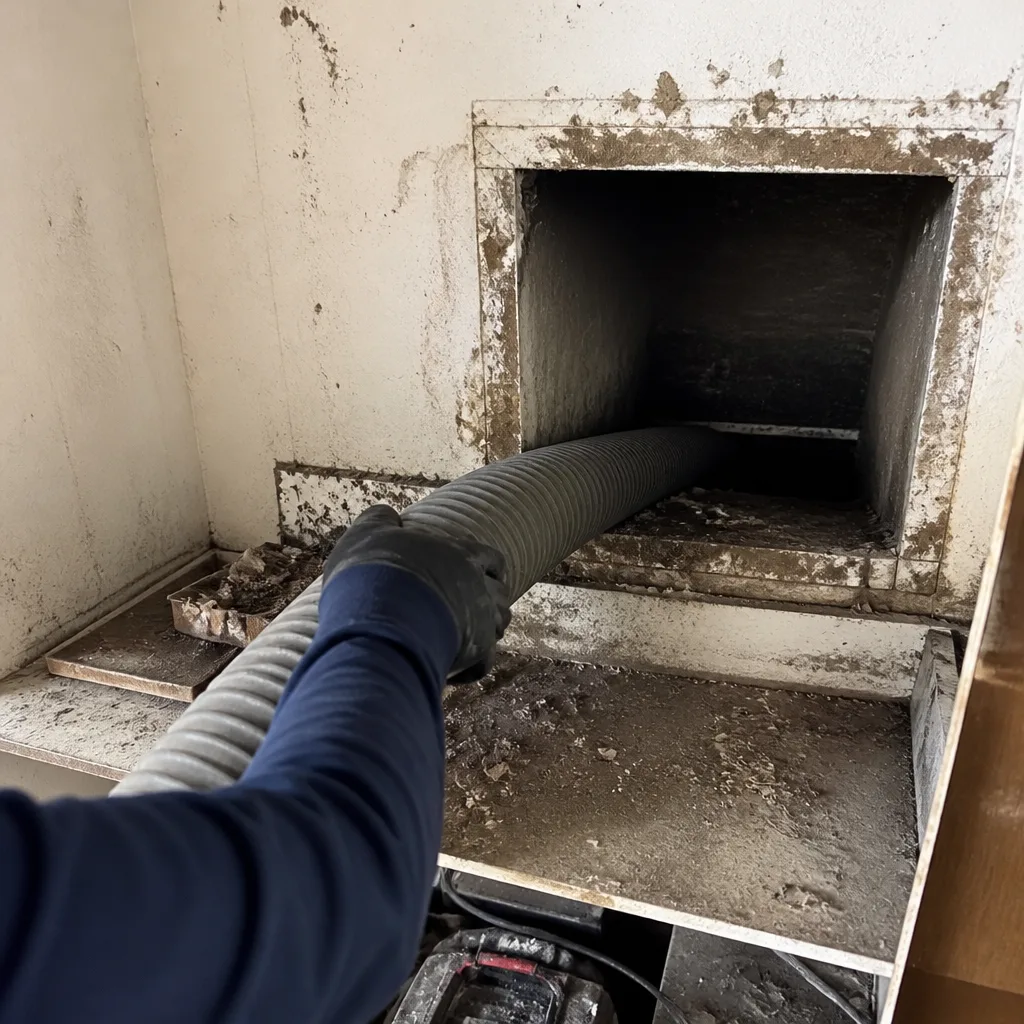 Before
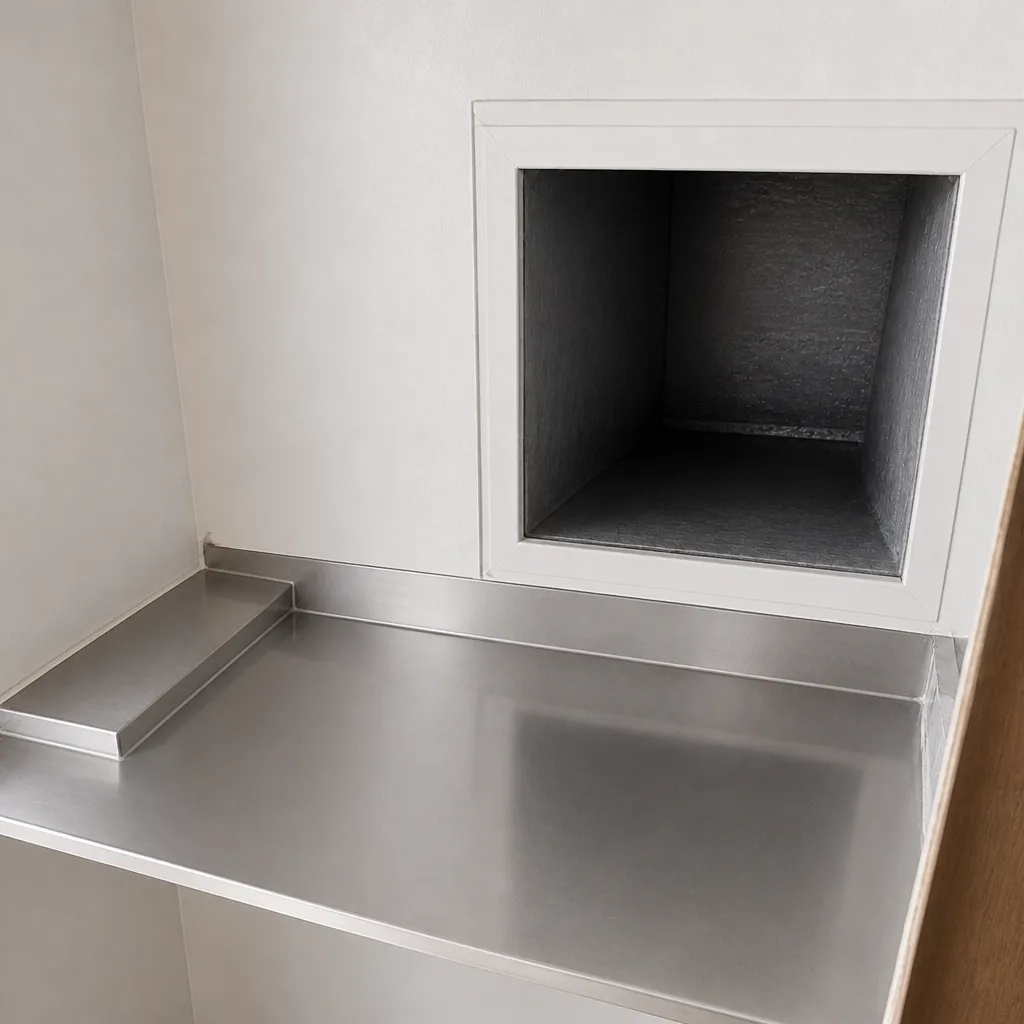 After
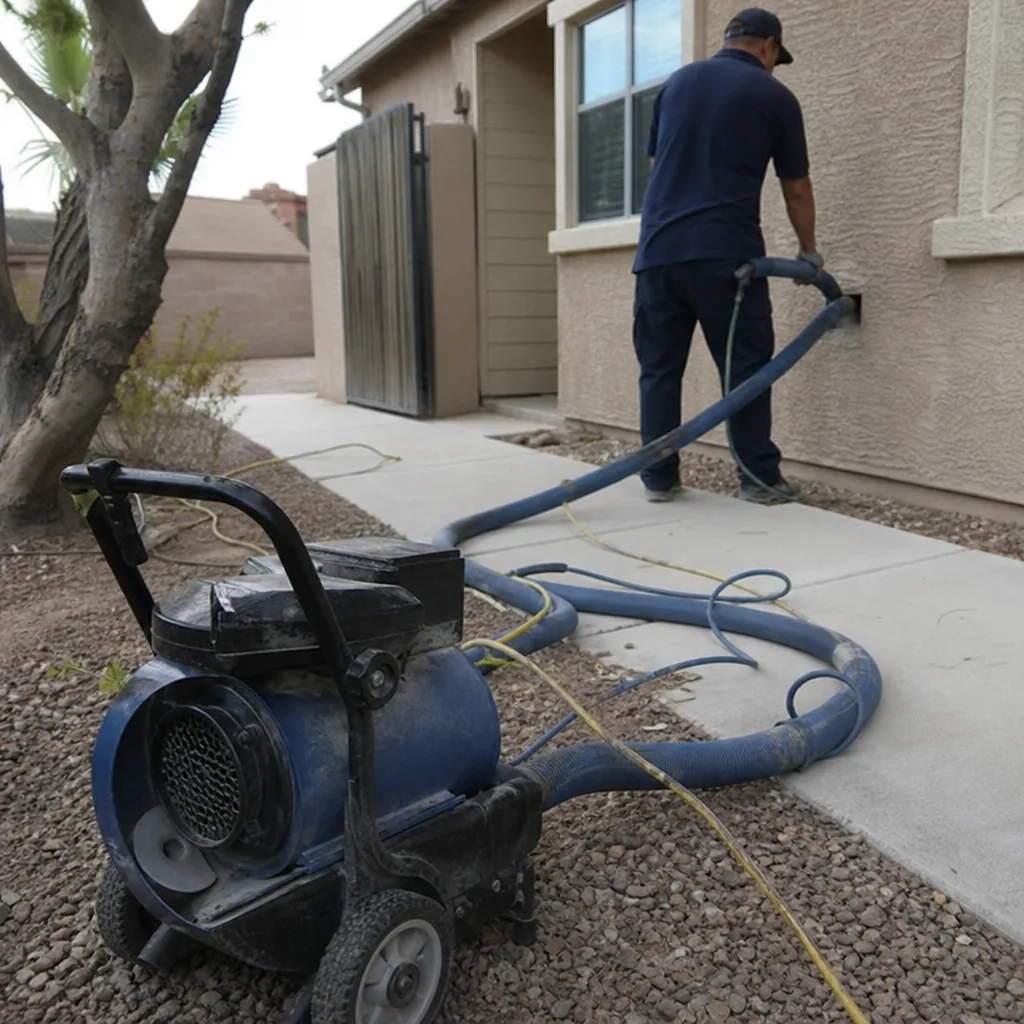 Before
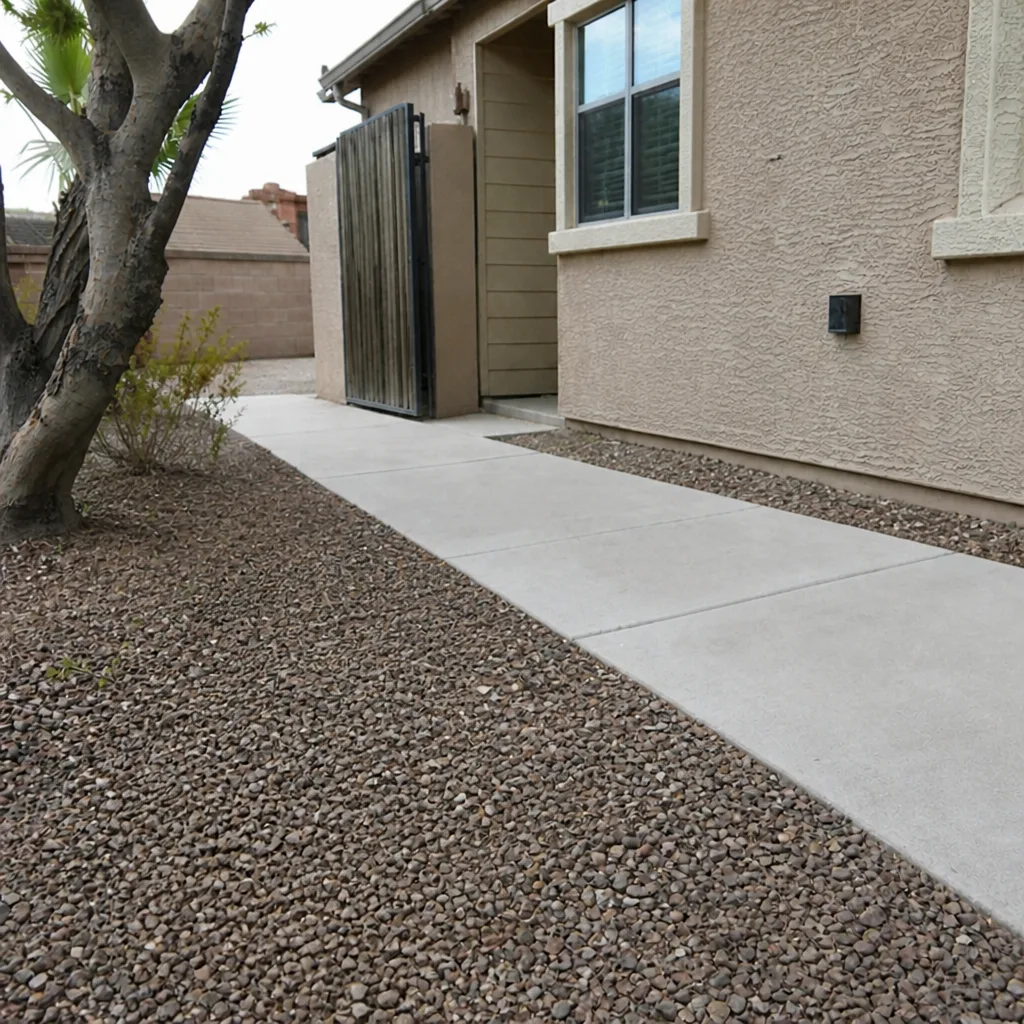 After
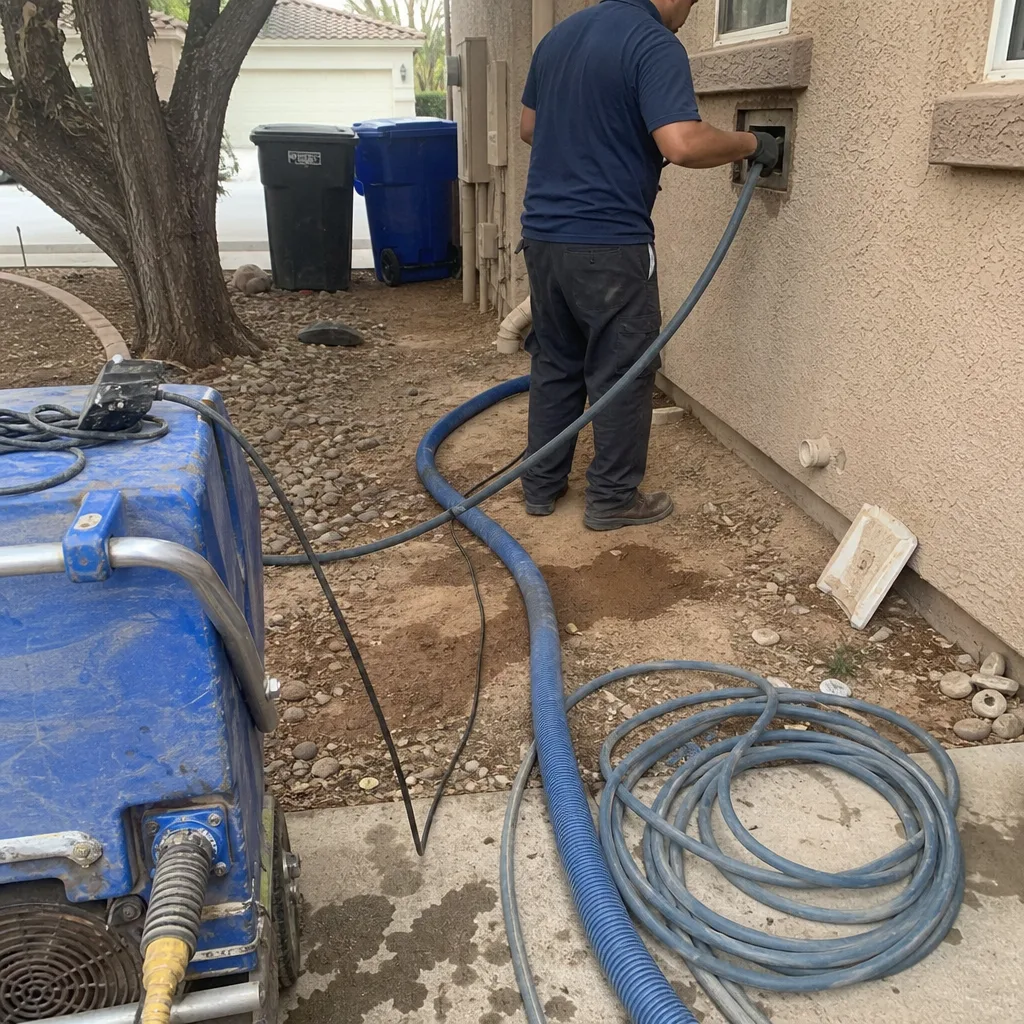 Before
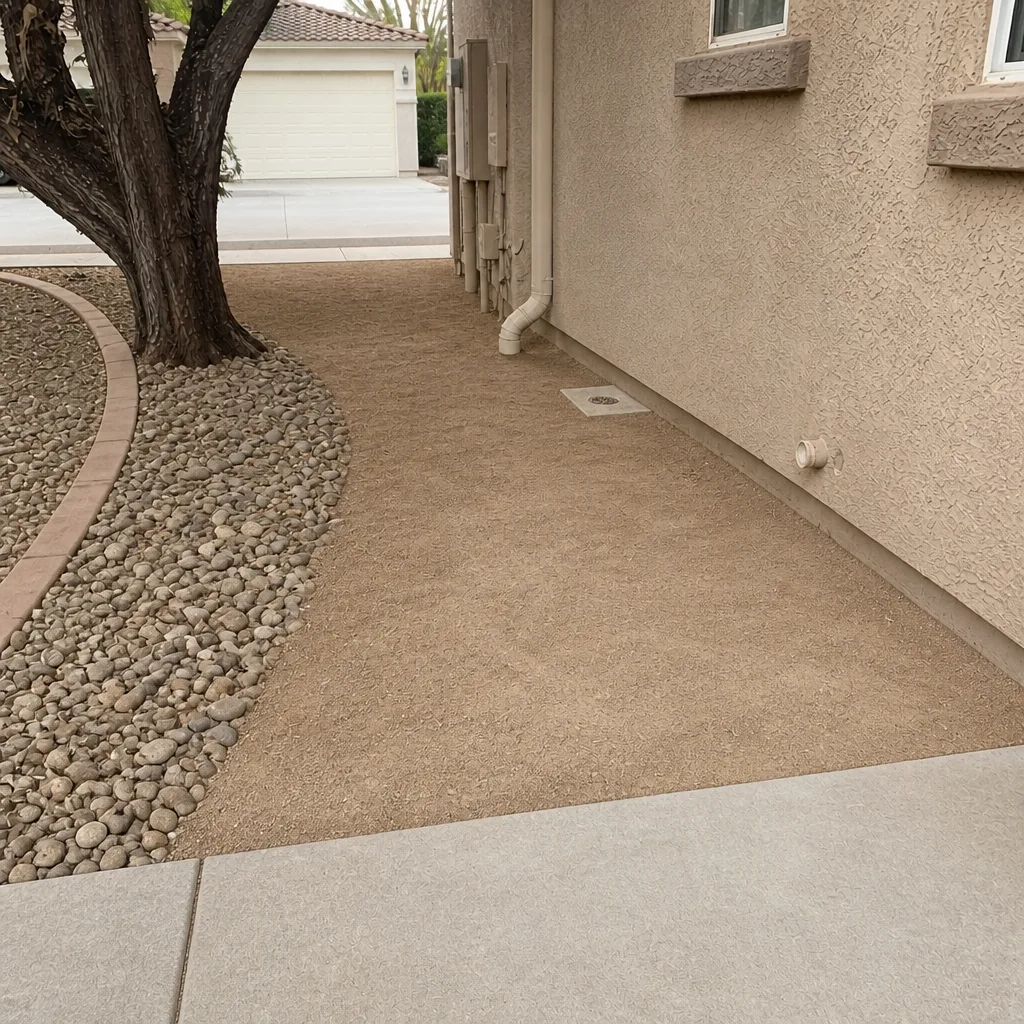 After
Frequently Asked Questions
You can clean the visible parts of your duct system with a shop vac – the return grilles, the register boots, the first few inches of each run – and that’s worth doing as routine maintenance. What you cannot do is remove settled debris from the main trunk lines or deep flex runs, because a shop vac can’t create the system-wide negative pressure that makes source removal work. The distinction isn’t about effort; it’s about the physics of airflow.
Air duct cleaning in Peoria typically runs from about $300 to $700 for a standard single-system home, with larger homes or heavily soiled systems landing higher. The final price is set by the written estimate after the technician sees the system, not by a phone quote or a coupon figure. When you compare bids, ask what equipment will be used and whether the price includes the air handler and blower.
Low teaser prices usually reflect register-only work, not source removal – a technician vacuums visible openings and calls it done, without the truck-mount vacuum, negative pressure, or agitation step that actually cleans the ducts. Some cheap quotes are also per-vent pricing, which scales up fast once the tech is on site. Ask any company to name the equipment they’ll bring and whether they provide before-and-after photos of the actual ductwork. A real quote is one flat price per system, agreed before work starts.
For most Peoria homes, every few years is reasonable if you keep filters changed and leave the system undisturbed. Trigger events reset that clock: after a renovation, pest activity, water damage, or a long vacancy, cleaning is warranted regardless of how recently the system was done. There’s no universal annual schedule – the honest answer depends on your system and what’s happened to it.
Ask for before-and-after photographs of the ductwork being cleaned. Any legitimate cleaning operation should be able to show you the interior of the trunk line and at least one long branch run before and after the job. Combine that with a written scope agreed upfront and a single flat price per system, and you have a verifiable record of what was done. If photos aren’t offered, ask directly.
A duct cleaner only removes debris; a repair-capable provider can also address the damage that’s often discovered once the system is opened up – torn flex jackets, disconnected joints, crushed or sagging runs. Since two-thirds of duct issues we encounter turn up during the cleaning, having repair as part of the same service avoids a second contractor visit and ensures the system is both clean and sealed when the job finishes.
The Bottom Line
DIY duct work and professional duct cleaning are two different activities that both have a place. Homeowner maintenance – grille washing, filter changes, register vacuuming – is genuinely useful, extends the interval between cleanings, and keeps the system’s entry points clear. Actual cleaning, meaning source removal from main trunk lines and deep flex runs, requires commercial-grade negative-pressure equipment and, in a Peoria attic in summer, a trained technician who knows the environment. If your system is clean and maintained, keep doing what you’re doing. If you’ve had a renovation, a pest issue, a musty smell, or you don’t know the system’s history, call (844) 834-5310 for a free estimate. We answer 24/7. Fast dispatch from 7am to 7pm, Sunday through Friday.
Written by the team at Duct Cleaning Peoria.